
Readiness Score Explained: How Wearables Decide If You're Ready to Train

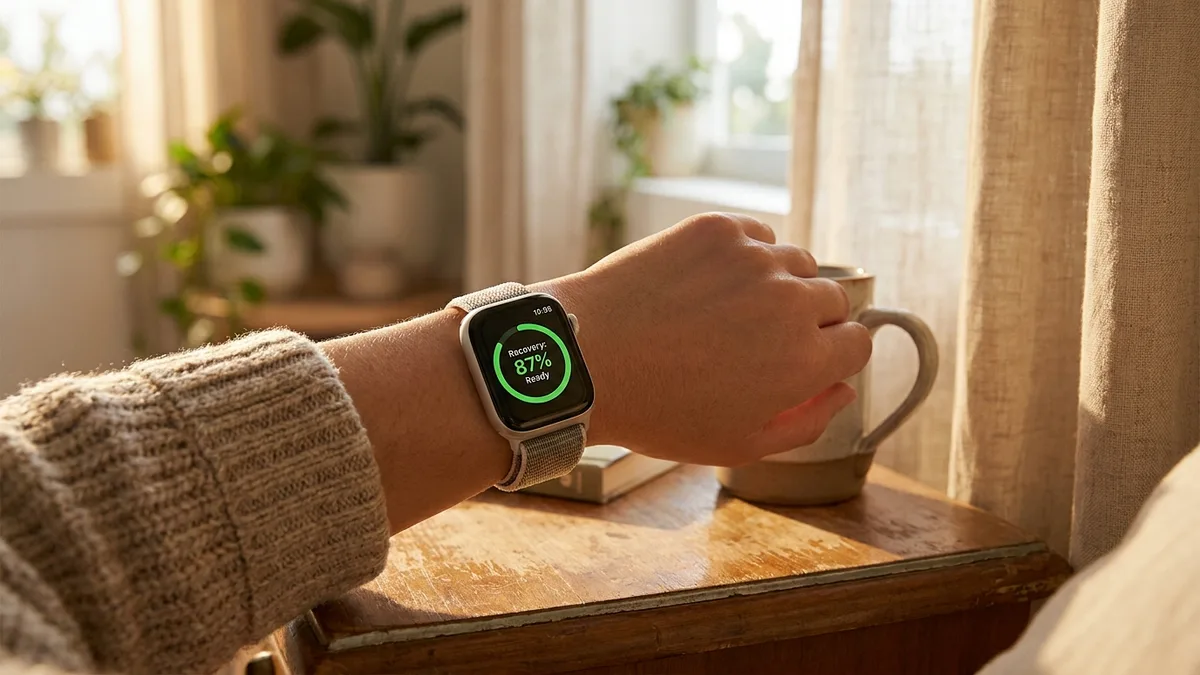
You roll over, check your wrist, and see a number: 62. Your watch calls it your "readiness score" — or recovery score, or daily readiness, depending on who made it. The number is lower than yesterday. Should you skip the gym? Push through? What does 62 even mean?
The readiness score has quietly become the single most important number in wearable health tracking. WHOOP built its entire business on it. Oura made it their flagship metric. Fitbit, Garmin, and Apple Watch apps all have their own version. But almost no one explains what's actually in the number — or how to use it without becoming obsessed.
Let's fix that.
What Is a Readiness Score?
A readiness score (sometimes called a recovery score) is an algorithm's best guess at how prepared your body is for stress today — whether that's a hard workout, a packed work day, or just a night with bad sleep ahead.
It's always scaled 0–100. Higher is better. And it's not a direct measurement — it's an estimate pieced together from several overnight biometrics.
The key word is estimate. A 2025 review of composite health scores in consumer wearables found that readiness/recovery scores are "algorithm-derived approximations" that combine multiple signals using proprietary weightings that differ wildly between brands.
Translation: your Oura score and your Whoop score for the same night can differ by 20+ points — and both can be "right" by their own logic.
The 4 Metrics Every Readiness Score Uses
Every mainstream readiness score draws from the same small set of overnight biometrics. The 2025 review of composite wearable scores maps these inputs clearly: HRV, resting heart rate, sleep duration, and recent physical activity are the near-universal ingredients.
Here's what each one actually tells your wearable.
1. Heart Rate Variability (HRV)
HRV is the variation in time between each heartbeat, measured in milliseconds. Higher = more parasympathetic (rest-and-digest) nervous system activity = better recovered.
Your wearable compares last night's HRV to your personal 14-day baseline, not a population average. That's why your "good HRV" might be 45ms and someone else's might be 85ms — only the change from your own baseline matters.
If you want the deeper dive, we wrote a full guide to HRV and why it matters.
2. Resting Heart Rate (RHR)
Your lowest heart rate during sleep. A resting heart rate that drifts 5–10 bpm above your baseline is a strong signal of incomplete recovery, fighting off illness, alcohol, or acute stress.
RHR is one of the most reliable recovery signals because it's physically hard to fake — your body either slowed down at night or it didn't.
3. Sleep Quality and Debt
Not just total hours, but:
- Time in deep sleep (physical repair)
- Time in REM sleep (mental recovery)
- Sleep consistency across the last 1–2 weeks
- Accumulated sleep debt from short nights
This is where scores get aggressive. Oura's readiness score weighs your two-week sleep balance, not just last night — one great night doesn't undo a week of 5-hour sleeps.
4. Recent Training Load
Yesterday's workouts matter. A hard session leaves residual inflammation and elevated sympathetic tone for 24–72 hours. Your wearable detects this through elevated nighttime heart rate, suppressed HRV, and longer "recovery time" (how long it took your heart rate to settle after you lay down).
Some scores (notably WHOOP's) also factor in strain over the past 3–7 days to catch accumulated fatigue before it wrecks you.
How Oura, WHOOP, and Apple Watch Apps Differ
All readiness scores sound similar. They're not.
Oura Readiness Score emphasizes long-term trends. It uses seven contributors across three pillars: sleep, activity, and body stress signals. Body temperature deviation is heavily weighted — Oura will knock your score hard if your skin temp is off baseline (often the first sign of illness). (source)
WHOOP Recovery Score is the most aggressive about HRV. Roughly 60% of your daily score comes from morning HRV relative to baseline. It's built for athletes chasing peak training windows and is notoriously harsh on hangovers.
Fitbit Daily Readiness Score (Premium-only) weighs sleep score, HRV, and recent activity about equally. It's the gentlest — rarely drops below 40 unless you're genuinely wrecked.
Apple Watch doesn't have a native readiness score, but third-party apps including Livity build their own from the same underlying HealthKit data.
📱 Livity builds a readiness score from your Apple Watch HRV, resting heart rate, and sleep — with no subscription and no extra ring, band, or strap. Try it free →
What's Actually a "Good" Readiness Score?
Most wearables use roughly the same thresholds:
- 85–100: Optimal. Green light. Your body is primed. Good day to push a hard workout, a long run, or tackle a stressful meeting.
- 70–84: Good. Normal recovery. Train as planned. No red flags.
- 60–69: Compromised. Something's off. Consider lowering intensity or swapping your hard session for mobility or Zone 2.
- Below 60: Poor. Back off. Sleep, hydrate, eat real food, and train lightly if at all.
One important caveat: your absolute score matters less than your change from baseline. Dropping from 90 to 75 means something different from dropping from 65 to 50. Look at the trend, not just the number.
How to Use Your Readiness Score to Train Smarter
Here's the honest truth: most people overreact to a bad score and underreact to a good one.
A practical framework:
On high readiness days (85+): Push the hard sessions. Intervals, heavy lifts, long runs. Your body is telling you it can handle load.
On moderate days (70–84): Train as planned. Don't overthink it. The score is saying "normal."
On low days (60–69): Swap your hard workout for Zone 2, yoga, mobility, or a walk. You'll lose almost nothing and protect yourself from digging a deeper hole.
On very low days (<60): Take the rest day. Seriously. The 2025 long-term exercise + HRV meta-analysis and the broader readiness-guided training literature both point the same direction: training hard while your autonomic system is suppressed yields worse adaptations than respecting the recovery signal.
Why Your Score Might Be Wrong
Readiness scores are imperfect. A few common failure modes:
- Traveled time zones? Most algorithms freak out for 2–3 days. Ignore the score.
- Late heavy meal? Elevated nighttime HR → lower score → not real recovery deficit.
- Alcohol? Even one drink destroys HRV overnight. Your score will be low. It's not wrong, but it's not a training signal either — it's telling you alcohol wrecked your sleep.
- Menstrual cycle. Hormonal shifts across the luteal phase tend to suppress HRV and raise resting heart rate — so readiness scores dip naturally even with identical behaviour. Not a recovery problem; a physiology feature.
- Sick? Elevated RHR and skin temp before symptoms hit is often the earliest signal.
The score is a tool, not a verdict. Match it against how you actually feel before deciding what to do.
Frequently Asked Questions
Is a readiness score the same as a recovery score? Functionally yes. WHOOP uses "recovery." Oura and Fitbit use "readiness." They measure the same thing — how prepared your body is for stress today.
Why is my readiness score low even though I slept 8 hours? Sleep duration is only one of four inputs. Elevated resting heart rate, low HRV, high body temperature, or hard training the day before can all pull your score down independently of sleep hours.
Can I "hack" my readiness score? Sort of. Sleep more, drink less, eat earlier, manage stress, and stay consistent. There are no shortcuts — the score is reflecting real physiology.
How long does it take to improve my readiness score? Sleep and hydration changes show up within 1–3 nights. HRV and resting heart rate baselines shift over 2–4 weeks of consistent habits.
Do I need an Oura ring or Whoop band for a readiness score? No. Apple Watch tracks all the underlying signals (HRV, resting heart rate, sleep stages, body temperature). Apps like Livity compute a readiness score from that data with no subscription.
The Bottom Line
A readiness score is a useful signal, not a command. It combines HRV, resting heart rate, sleep, and training load into one number that tells you — roughly — how much stress your body can handle today.
Don't chase the number. Use it as a nudge: go hard when it's green, back off when it's red, and mostly just train as planned when it's in the middle. Over months, the trend is what matters.
Start Tracking Your Readiness Today
The score in your wearable isn't magic — it's HRV, resting heart rate, and sleep, blended by an algorithm. Once you know what's in the number, you can stop obsessing and start using it.
Livity builds your daily readiness score automatically from your Apple Watch data — no Oura ring, no Whoop strap, no monthly subscription. Free to try on the App Store.
Fuentes
- Composite health scores in consumer wearables: a review — Translational Exercise Biomedicine, 2025
- The Association of Sleep Duration and Quality with Heart Rate Variability and Blood Pressure — Nature and Science of Sleep, 2020
- The impact of long-term exercise intervention on heart rate variability indices: a systematic meta-analysis — Frontiers in Cardiovascular Medicine, 2025

iOS developer with 7+ years of experience and an active volleyball player. Built Livity after spending months looking for advanced recovery and sleep tracking that worked natively with Apple Watch — and finding nothing. Uses his own HRV, sleep, and training-load data every day to shape what Livity measures.
Más de este autor¿Listo para optimizar
tu salud?
Únete a miles de usuarios que ya han mejorado su bienestar con Livity. Descarga ahora y comienza tu viaje hacia una vida más saludable.