
Garmin Cirqa vs Fitbit Air: Which Screenless Health Tracker Wins?

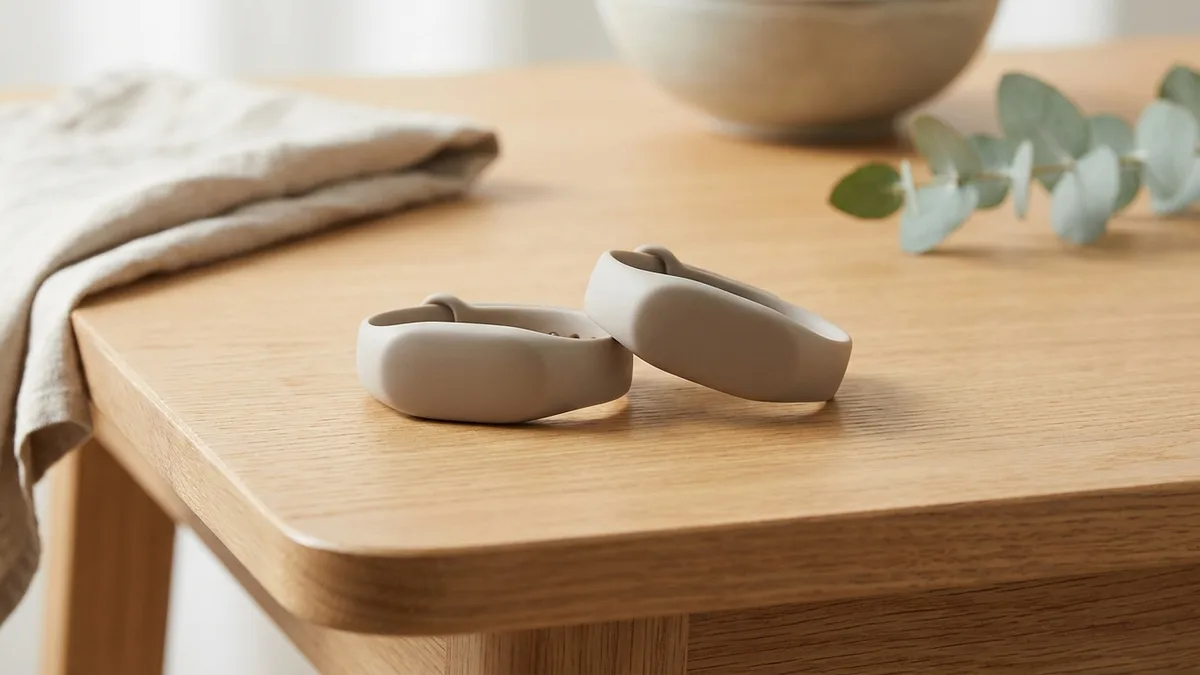
Whoop suddenly has two would-be killers circling it, and neither one has a screen. Fitbit Air is real, on shelves, and $99.99. Garmin Cirqa is still a rumor — leaked images, a backend price entry, and a launch window that keeps slipping.
If you're trying to decide between Garmin Cirqa vs Fitbit Air, the honest answer right now is that you're comparing a shipping product to a product that doesn't officially exist yet. Here's what we actually know about both, and — if you already wear an Apple Watch — whether you need either one.
Fitbit Air: shipping now, here's what it does
Google announced the Fitbit Air on May 7, 2026, and it went on sale May 26. It's a screenless, pebble-shaped tracker weighing 0.03 lbs, water resistant to 50m, that tracks 24/7 heart rate, HRV, SpO2, resting heart rate, heart rhythm/AFib alerts, and sleep stages.
Battery life is up to 7 days, with a 5-minute fast charge covering a full day. It's Bluetooth-only — no onboard GPS, it relies on "connected GPS" through your paired phone — and requires Android 11+ or iOS 16.4+, a Google Account, and the Google Health app.
Pricing: $99.99 base (with a 3-month Google Health Premium trial bundled in), $129.99 for the Stephen Curry Special Edition, and bands starting at $34.99. The core features — HRV, SpO2, sleep, Cardio Load, Daily Readiness — are free forever. The Gemini-powered AI Health Coach sits behind Google Health Premium at $9.99/month or $99.99/year.
We wrote a full teardown of what it's actually like to use one — our full Fitbit Air review covers the day-to-day experience if you want the deeper dive.
Garmin Cirqa: still a rumor, and the price is a mess
Here's where we need to be careful: Garmin has not officially announced Cirqa as of this writing. Everything below comes from leaks, not a Garmin press release.
What's leaked so far: a screenless smart health band with skin temperature and EDA (electrodermal activity) sensors, combining HR, HRV, respiration, skin temp, and pulse ox into a single "Health Status" metric. Like Fitbit Air, it's Bluetooth-only with no GPS, ANT+, or Wi-Fi, and needs your phone nearby to sync.
The price is genuinely unresolved. Earlier leaks pointed to around $199.99 / €199 / £179, and that number reappeared as recently as this week when a price was spotted directly in Garmin's own backend pricing system. But a separate leaked retailer listing has suggested it could land closer to $500. Treat both numbers as unconfirmed until Garmin actually announces the device — we'd lean toward the backend figure being closer to reality, but we've been burned by leaks before.
Shipping was originally rumored for May–June 2026. That window has clearly slipped — as of July 20, 2026, recent leaks suggest an announcement could still be imminent (some outlets are floating mid-to-late July), but nothing is confirmed. Don't assume it's already shipped, and don't assume the original date holds — check for a fresh announcement before you make a purchase decision based on this post.
If you want the fuller rundown on what Cirqa is rumored to do and whether it's worth waiting for at all, we broke down whether you need one at all in our Apple Watch comparison.
Garmin Cirqa vs Fitbit Air: spec comparison
| Spec | Fitbit Air | Garmin Cirqa (rumored) |
|---|---|---|
| Status | Shipping since May 26, 2026 | Not yet officially announced |
| Price | $99.99 (base) | Unconfirmed — leaks range $199.99–$509 |
| Subscription | Optional, $9.99/mo for AI coaching | Unknown |
| Screen | None | None |
| Battery life | Up to 7 days | Unknown |
| GPS | None (phone-dependent) | None (phone-dependent, per leaks) |
| Companion app | Google Health (iOS 16.4+ / Android) | Presumably Garmin Connect |
| Key sensors | HR, HRV, SpO2, skin temp, AFib alerts | HR, HRV, SpO2, skin temp, EDA (rumored) |
| Works with iPhone | Yes | Unknown |
Who should actually buy which
If you need to decide today, the choice mostly makes itself: Fitbit Air is the only one you can buy. But assuming Cirqa eventually ships near its rumored specs, here's how we'd frame it.
Fitbit Air makes sense if: you don't already own a Garmin device, you want the cheapest entry into 24/7 recovery tracking, and you're fine running a second app (Google Health) alongside whatever else you use.
Garmin Cirqa makes sense if: you're already deep in the Garmin ecosystem — a Garmin watch, Garmin Connect history, existing training load data — and you want a screenless companion band that plugs into data you already have. Outside of existing Garmin owners, it's hard to justify paying a premium (especially if the $500 price leak turns out to be closer to true) for a band that does roughly the same thing as the cheaper Fitbit Air.
This mirrors the consensus that's emerged elsewhere covering this exact matchup: for someone new to the category or switching off Whoop with no existing hardware loyalty, Fitbit Air is the safer, cheaper bet. Cirqa only really pays off if you're already bought into Garmin.
📱 Livity turns the sensors you already own on your Apple Watch into a daily recovery score, HRV trend, and sleep breakdown — no extra band, no second subscription. Try it free →
The case for neither: what if you already have an Apple Watch?
Here's the part both product pages skip over. If you're an iPhone user who already wears an Apple Watch, buying a Cirqa or a Fitbit Air means paying for sensors you already have — 24/7 heart rate, HRV, SpO2, and sleep staging are all things Apple Watch already tracks — and then juggling a second app and a second account to see them.
To be fair to Fitbit Air, it's not an Android-only product: it works fine as an iOS companion (iOS 16.4+), since it runs on a Google Account and the Google Health app rather than Apple Health. But that's still a second ecosystem living next to Apple Health, not integrated with it. Garmin Cirqa, once it ships, will presumably work the same way through Garmin Connect — a separate app, separate login, separate data silo.
The metrics these bands are built around aren't exotic. HRV as a recovery signal is backed by a fairly deep body of research, including a systematic review and meta-analysis on HRV-guided training published via NIH's PMC archive. And wrist-based optical sensors — the same PPG technology inside Fitbit Air, Cirqa, and your Apple Watch — have been validated against ECG for heart rate accuracy in peer-reviewed research, with good agreement at rest and during steady-state activity. None of that science requires a new piece of hardware on your wrist if you already own an Apple Watch.
That's the gap Livity is built to close: it reads what your Apple Watch is already collecting through Apple Health and turns it into the same kind of recovery score, sleep breakdown, and HRV trend these screenless bands are selling — without asking you to buy a second sensor or manage a second account.
FAQ
Is Garmin Cirqa out yet?
No. As of July 20, 2026, Garmin has not officially announced Cirqa. Leaked images, FCC filings, and a price entry in Garmin's backend suggest an announcement is close, but the original May–June 2026 shipping window has already slipped.
How much does Fitbit Air cost?
$99.99 for the standard version, $129.99 for the Stephen Curry Special Edition. Core tracking (HRV, SpO2, sleep, Daily Readiness) is free; the AI Health Coach requires Google Health Premium at $9.99/month or $99.99/year.
Which screenless tracker is better, Cirqa or Fitbit Air?
Right now Fitbit Air wins by default because it's the only one you can actually buy. If Cirqa ships near its rumored $199.99 price, it becomes a reasonable option specifically for existing Garmin ecosystem users. If the higher $500-ish leaked price turns out to be accurate, it's a much harder sell against a $99.99 competitor doing similar things.
Does Fitbit Air work with iPhone?
Yes. Fitbit Air supports iOS 16.4 and up. It runs through a Google Account and the Google Health app rather than Apple Health, so it's a second app alongside anything you already use for Apple Watch data.
Do I need either if I have an Apple Watch?
Probably not. Your Apple Watch already tracks 24/7 heart rate, HRV, SpO2, and sleep stages. What you're usually missing isn't the sensor — it's software that turns that raw Apple Health data into a clear recovery score and trend, which is exactly what apps like Livity are for.
Start Tracking Your Recovery Today
You don't need to wait for Garmin Cirqa to ship, and you don't need a second app for Fitbit Air, to get real recovery, HRV, and sleep insight. Your Apple Watch is already collecting the data.
Livity turns your existing Apple Watch data into a daily recovery score, HRV trend, sleep breakdown, and training load — no extra band, no second account, no Whoop-style forever subscription. Free to try on the App Store.
Sources
- HRV-guided training: a systematic review and meta-analysis — International Journal of Environmental Research and Public Health (NIH/PMC), 2021
- Accuracy of wrist-worn PPG heart rate sensors — JMIR Cardio, 2021
- Introducing the new Google Fitbit Air — Google Blog, 2026
- Garmin CIRQA price appears in Garmin's own backend — Gadgets & Wearables, 2026
- 2 Garmin Cirqa images leaked — the5krunner, 2026

iOS developer with 7+ years of experience and an active volleyball player. Built Livity after spending months looking for advanced recovery and sleep tracking that worked natively with Apple Watch — and finding nothing. Uses his own HRV, sleep, and training-load data every day to shape what Livity measures.
More from this authorStart Your Wellness Journey Today
Live Your Best Life
Join thousands of users who are already tracking their health with Livity.