
How Much Sleep Do You Need? Hours, Quality, and Tips

A third of your life is spent asleep — or at least it should be. Research from Oregon Health & Science University found that sleeping less than 7 hours per night is associated with a 14% increase in mortality risk, and that sleep's impact on life expectancy is stronger than diet, physical activity, or social isolation. So how much sleep do you actually need, and why do the hours only tell part of the story?
How Much Sleep Do You Need by Age?
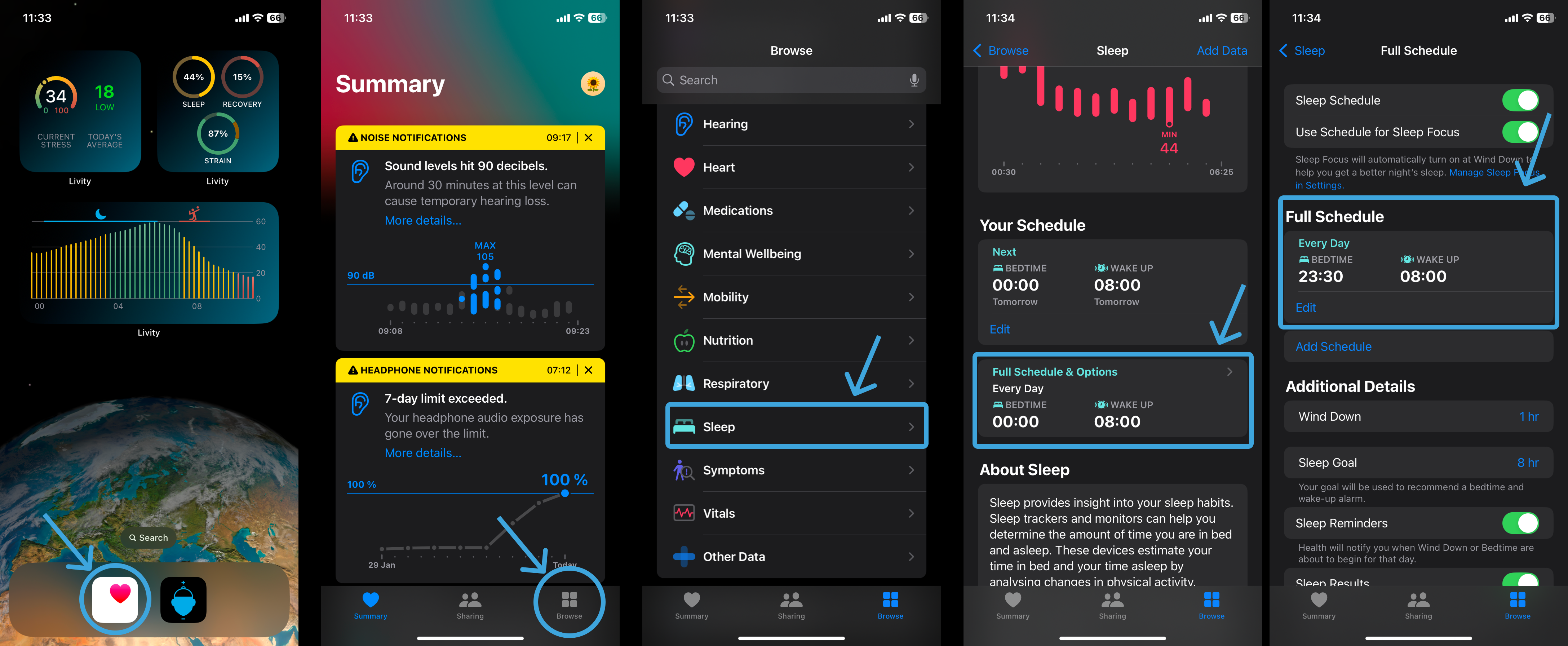 Livity tracks your sleep directly from your Apple Watch — no extra hardware needed.
The short answer for adults: 7 to 9 hours per night. But sleep needs change significantly across your lifespan. Here are the current guidelines from the National Sleep Foundation and the CDC:
| Age Group | Recommended Hours |
|---|---|
| Infants (4–12 months) | 12–16 hours (including naps) |
| Toddlers (1–2 years) | 11–14 hours (including naps) |
| Preschoolers (3–5 years) | 10–13 hours (including naps) |
| School-age (6–12 years) | 9–12 hours |
| Teens (13–18 years) | 8–10 hours |
| Adults (18–64 years) | 7–9 hours |
| Older adults (65+) | 7–8 hours |
These are ranges, not hard rules. Some people function well at 7 hours; others genuinely need 9. Genetics, activity level, and health status all play a role. The key insight: consistently getting less than 7 hours is where the health risks start climbing.
Why Sleep Quality Matters Just as Much as Hours
Here's where it gets interesting. A study published in PMC found that sleep quality is a stronger predictor of health, mood, and life satisfaction than sleep duration. Ten hours of fragmented, restless sleep won't deliver the same benefits as seven hours of solid, uninterrupted rest.
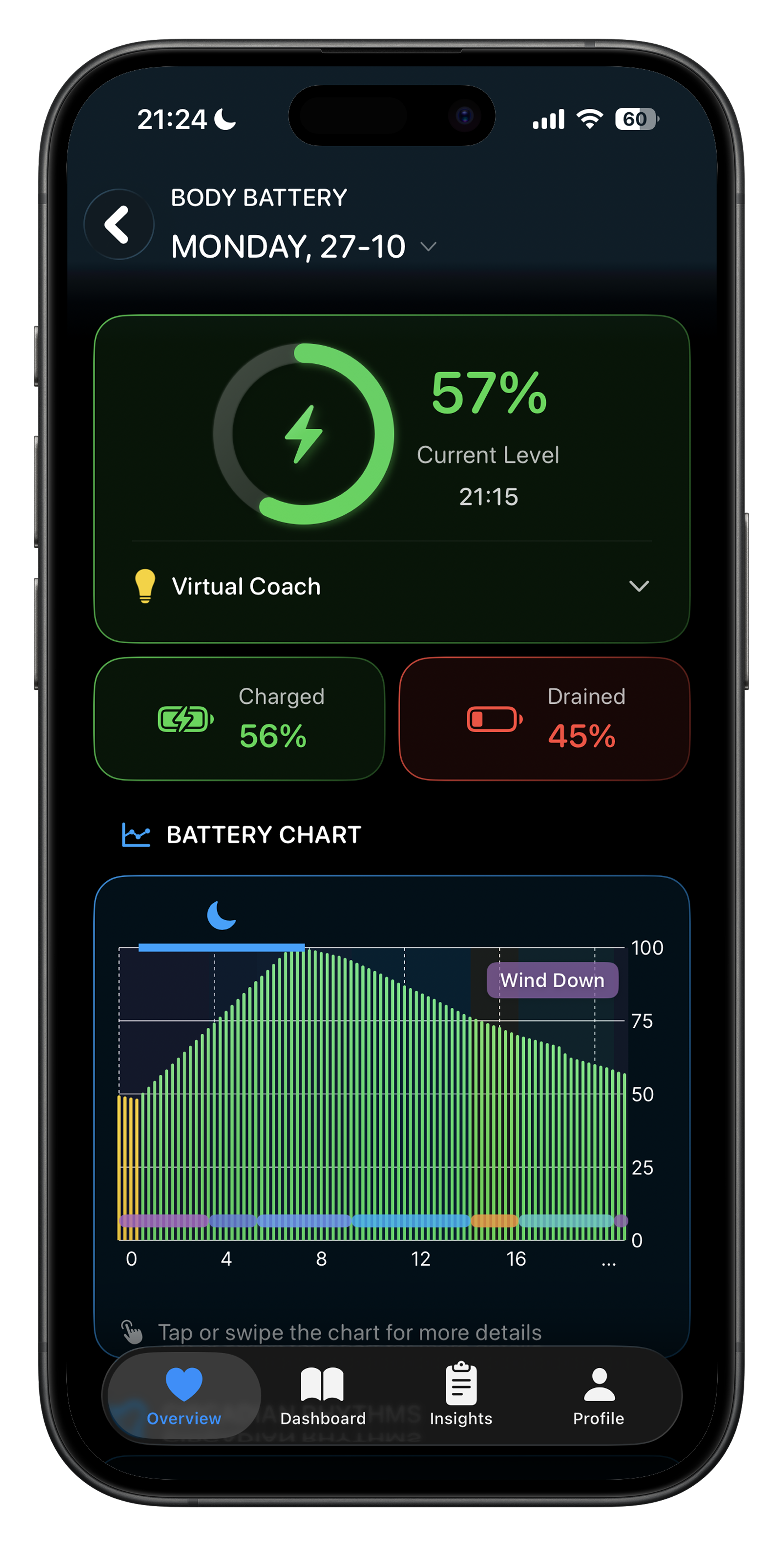
Your body battery reflects how well your sleep actually restored your energy — not just how long you were in bed.
The American Heart Association confirmed this in 2025: factors like how long it takes you to fall asleep, how often you wake during the night, and how regular your schedule is all affect heart and brain health independently of total sleep time.
So what defines quality sleep?
- Falling asleep within 15–20 minutes of getting into bed
- Sleeping through the night with minimal wake-ups (one or fewer)
- Spending sufficient time in deep and REM sleep — these are the restorative stages
- Waking up feeling refreshed, not groggy or exhausted
If you're consistently hitting 8 hours but still dragging through the day, the problem is probably quality, not quantity.
📱 Livity tracks your sleep quality, recovery, and body battery from your Apple Watch — so you can see how your sleep habits actually affect your energy. Try it free →
Sleep Regularity: The Factor Most People Ignore
A study published in SLEEP found that sleep regularity is a stronger predictor of mortality risk than sleep duration. Going to bed and waking up at roughly the same time each day — even on weekends — keeps your circadian rhythm aligned and improves sleep quality across every stage.
This is why "catching up" on weekends doesn't work the way people hope. The phenomenon, known as social jetlag, disrupts your internal clock and can take days to recover from — even if you technically logged enough hours.
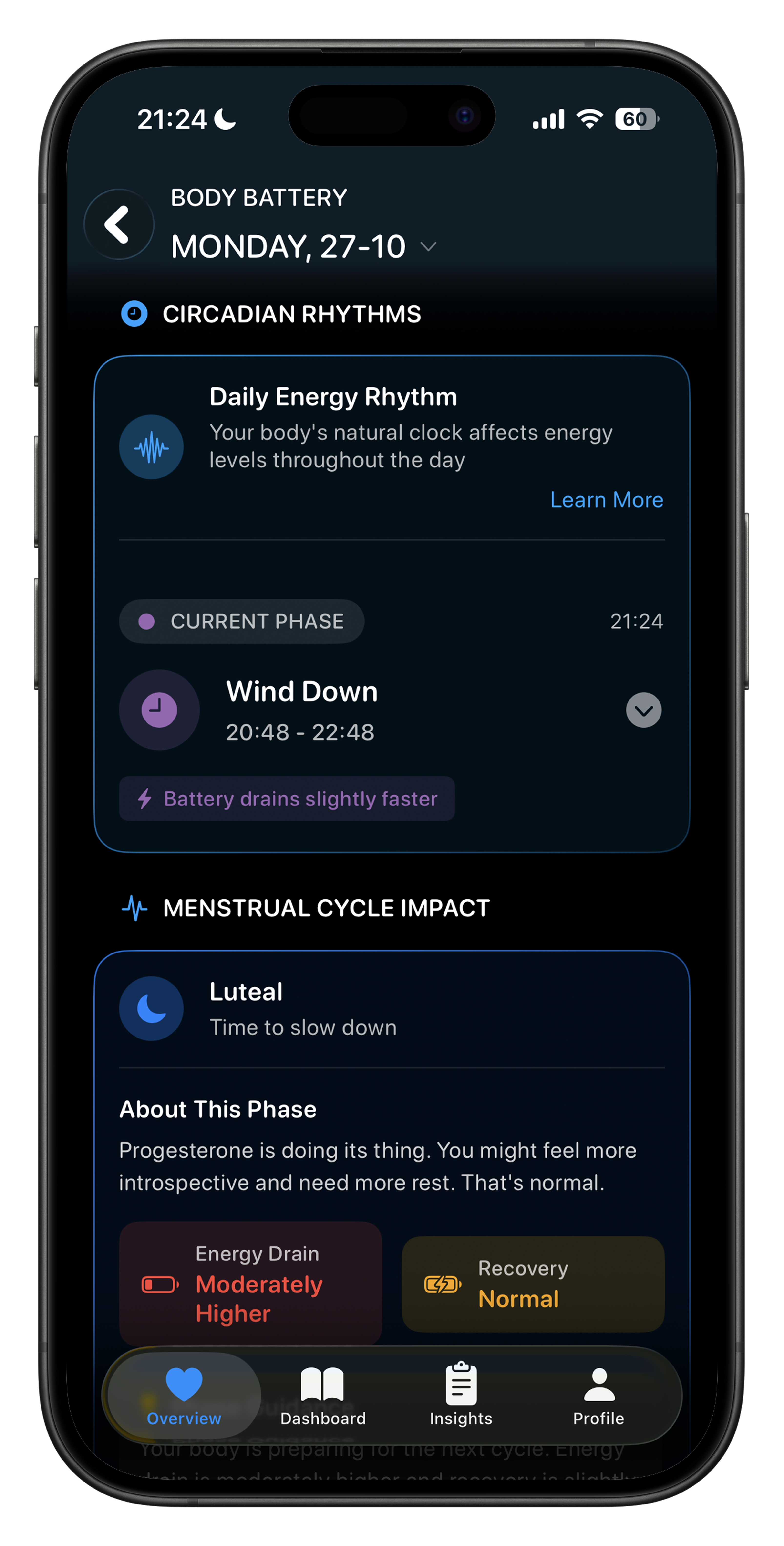
Livity tracks your circadian phase to help you understand your body's natural rhythm.
Consistency is also one of the three pillars behind Apple's Sleep Score (worth 30 out of 100 points). If you're trying to improve your sleep data, nailing a regular schedule is often the highest-impact change you can make.
Signs You're Not Getting Enough Sleep
Not sure if you're sleeping enough? Watch for these signals:
- Needing caffeine to function before mid-morning
- Falling asleep within 5 minutes of lying down (this actually signals sleep deprivation, not good sleep)
- Brain fog, poor concentration, or forgetfulness during the day
- Mood changes — irritability, anxiety, or feeling emotionally reactive
- Getting sick more often — sleep deprivation weakens immune response
- Increased appetite, especially cravings for high-sugar or high-carb foods
If more than two of these sound familiar, you likely need either more hours or better quality — or both.
7 Science-Backed Tips to Sleep Better
1. Set a consistent schedule. Go to bed and wake up at the same time every day — including weekends. This is the single most effective change you can make, according to sleep researchers at Harvard.
2. Keep your bedroom cool. The ideal sleeping temperature is around 18°C (65°F). Your core body temperature needs to drop slightly to initiate sleep, and a cool room helps this process.
3. Cut caffeine by early afternoon. Caffeine has a half-life of 5–6 hours. That 3 PM coffee is still 50% active at 9 PM. If you're sensitive, stop by noon.
4. Limit alcohol before bed. It might help you fall asleep faster, but alcohol suppresses REM sleep, increases nighttime waking, and leaves you less restored even after a full night.
5. Create a wind-down buffer. Put screens away 30–60 minutes before bed. The blue light suppresses melatonin, but the stimulation from content is arguably worse. Replace scrolling with something low-key — reading, stretching, or breathing exercises.
6. Exercise regularly — but not too late. Physical activity improves sleep quality significantly. Just keep vigorous exercise at least 2–3 hours before bed, as it raises your core temperature and alertness.
7. Track your sleep to spot patterns. You can't improve what you don't measure. Using your Apple Watch with an app like Livity lets you see not just how long you slept, but how your sleep quality affects your next-day recovery, body battery, and HRV — all without any extra hardware.
Frequently Asked Questions
Is 6 hours of sleep enough? For the vast majority of adults, no. While a small percentage of people carry a genetic variant (DEC2) that allows them to function on less, most people sleeping 6 hours regularly are accumulating sleep debt that affects cognition, mood, and long-term health.
Is it better to sleep 7 quality hours or 9 mediocre hours? Research suggests quality wins. A study of 1.1 million individuals found that 5 hours of quality sleep could be better for health outcomes than 8 hours of fragmented sleep. That said, the ideal is both — 7–9 hours of high-quality rest.
Does napping make up for lost sleep? Short naps (20–30 minutes) can help with alertness, but they don't fully compensate for chronic sleep deprivation. They also won't provide the deep sleep and REM cycles you missed. Naps are a supplement, not a replacement.
How do I know if I'm getting enough deep sleep? Most adults spend 15–20% of total sleep in deep sleep — roughly 1–1.5 hours per night. Apple Watch tracks sleep stages, and apps like Livity combine this with recovery metrics so you can see whether your sleep is actually restorative.
Does sleep need change with exercise? Yes. Higher training loads increase your body's need for recovery sleep. Athletes and active individuals often benefit from the upper end of the 7–9 hour range. Tracking your body battery and HRV after different sleep durations can help you find your personal sweet spot.
The Bottom Line
How much sleep do you need? 7 to 9 hours for most adults — but the hours are only the starting point. Sleep quality, consistency, and regularity are equally important for your health and daily performance.
The best way to dial in your sleep isn't guessing — it's tracking. Livity combines your Apple Watch sleep data with recovery, body battery, and HRV insights so you can see exactly how your sleep habits are affecting your energy and health.
Track your sleep with Livity — free to try on the App Store.

iOS developer with 7+ years of experience and an active volleyball player. Built Livity after spending months looking for advanced recovery and sleep tracking that worked natively with Apple Watch — and finding nothing. Uses his own HRV, sleep, and training-load data every day to shape what Livity measures.
More from this authorStart Your Wellness Journey Today
Live Your Best Life
Join thousands of users who are already tracking their health with Livity.