
Heart Rate Zones Explained: Fat Burning vs Cardio vs Peak

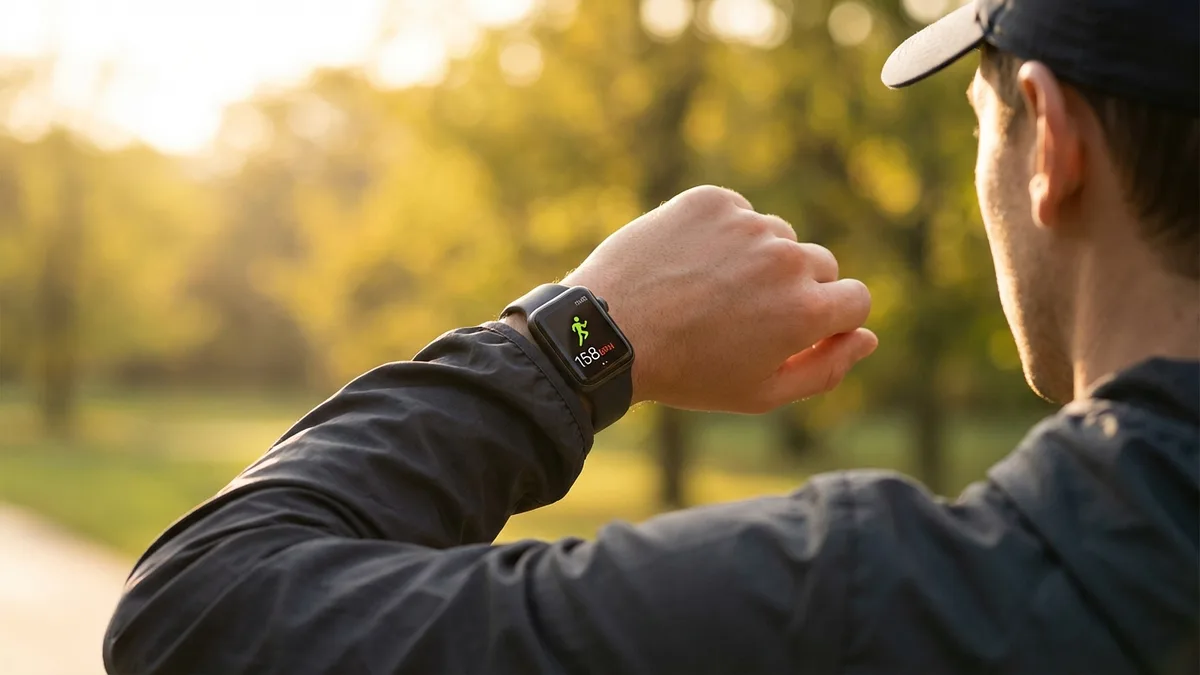
Every fitness tracker, smartwatch, and gym cardio machine shows you heart rate zones. But most people have no idea what they mean, which zone they should train in, or why their watch keeps telling them they're in "Zone 2."
Heart rate zones are the simplest way to know if you're working hard enough — or too hard. Once you understand them, you can stop guessing and start training with purpose. Here's how they work.
What Are Heart Rate Zones?
Heart rate zones are five intensity levels based on a percentage of your maximum heart rate (MHR). Each zone triggers different physiological responses — from burning fat at low intensity to building speed and power at maximum effort.
The standard formula for estimating your max heart rate is simple:
220 – your age = maximum heart rate
A 30-year-old has a max of roughly 190 bpm. A 40-year-old, about 180 bpm. These are estimates — your actual max could be 10-15 bpm higher or lower — but they're a reliable starting point.
From there, the five zones break down like this:
| Zone | Intensity | % of Max HR | How It Feels |
|---|---|---|---|
| Zone 1 | Very light | 50–60% | Easy conversation, barely sweating |
| Zone 2 | Light | 60–70% | Comfortable but breathing harder |
| Zone 3 | Moderate | 70–80% | Talking is difficult, heavy breathing |
| Zone 4 | Hard | 80–90% | Short phrases only, burning muscles |
| Zone 5 | Maximum | 90–100% | All-out effort, can't speak |
Let's break down what each zone actually does.
Zone 1 & 2: The Endurance Base (50–70% MHR)

Zone 1 is your warm-up and cool-down zone. Zone 2 is where the magic happens for endurance and long-term health.
In Zone 2, your body primarily burns fat for fuel. Your aerobic system is working efficiently, your mitochondria are being trained, and your cardiovascular base is building — all without beating your body up.
This is the zone that longevity researchers like Dr. Peter Attia have popularized. A 2026 review in Healthspan found that people who maintained aerobic fitness through moderate-intensity exercise had a 30% lower risk of all-cause mortality compared to sedentary individuals. Even 2–3 hours per week of Zone 2 training can reduce heart disease risk, improve insulin sensitivity, and lower inflammation.
What counts as Zone 2? Brisk walking, easy jogging, casual cycling, or swimming at a pace where you can hold a conversation but wouldn't want to sing. If you can talk in full sentences, you're probably in Zone 2. If you're gasping between words, you've drifted into Zone 3.
Who should train here: Everyone. Zone 2 should make up 60–80% of your total training time if you want to build a solid aerobic base without burning out.
Zone 3: The Cardio Sweet Spot (70–80% MHR)
Zone 3 is what most people think of as "cardio." You're breathing heavily, sweating noticeably, and can only speak in short sentences. This is the tempo run, the spin class, the circuit workout.
At this intensity, your body shifts from mostly fat to a mix of fat, carbohydrates, and some protein for fuel. You're building cardiovascular strength — your heart gets stronger at pumping blood, and your lungs get more efficient at exchanging oxygen.
According to the Cleveland Clinic, Zone 3 is where you build both strength and endurance simultaneously. It's the zone that improves your VO2 max and pushes your fitness forward.
Who should train here: Runners, cyclists, and anyone doing structured cardio. Aim for 1–2 sessions per week in Zone 3 alongside your Zone 2 base.
📱 Livity tracks your heart rate zones automatically from your Apple Watch — plus recovery, stress, body battery, and training load. Try it free →
Zone 4: The Lactate Threshold (80–90% MHR)
Zone 4 is where things get uncomfortable. Your muscles are producing lactate faster than your body can clear it. Talking takes real effort. This is the pace you can sustain for 20–40 minutes before you have to stop.
Training in Zone 4 raises your lactate threshold — the point at which your body shifts from aerobic to anaerobic metabolism. The higher your threshold, the faster you can go before "hitting the wall."
This zone is critical for competitive athletes. Interval training that pushes you into Zone 4 — like 4×4-minute intervals at hard effort with recovery between — is one of the most time-efficient ways to improve cardiovascular fitness.
Who should train here: Athletes, competitive runners, and experienced exercisers. Limit Zone 4 work to 1–2 sessions per week to avoid overtraining.
Zone 5: Maximum Effort (90–100% MHR)
Zone 5 is all-out. Sprints, hill repeats, the final 30 seconds of a race. You can sustain this for seconds to a few minutes at most. Your body is running entirely on stored carbohydrates, and oxygen demand far exceeds supply.
Training here builds fast-twitch muscle fibers, improves your body's ability to tolerate high levels of lactate, and strengthens your heart at peak capacity. But it also creates the most stress on your body and requires the most recovery.
Who should train here: Sprinters, HIIT enthusiasts, and athletes peaking for competition. Zone 5 should make up less than 5% of your total training — it's the seasoning, not the meal.
The Fat Burning Zone Myth
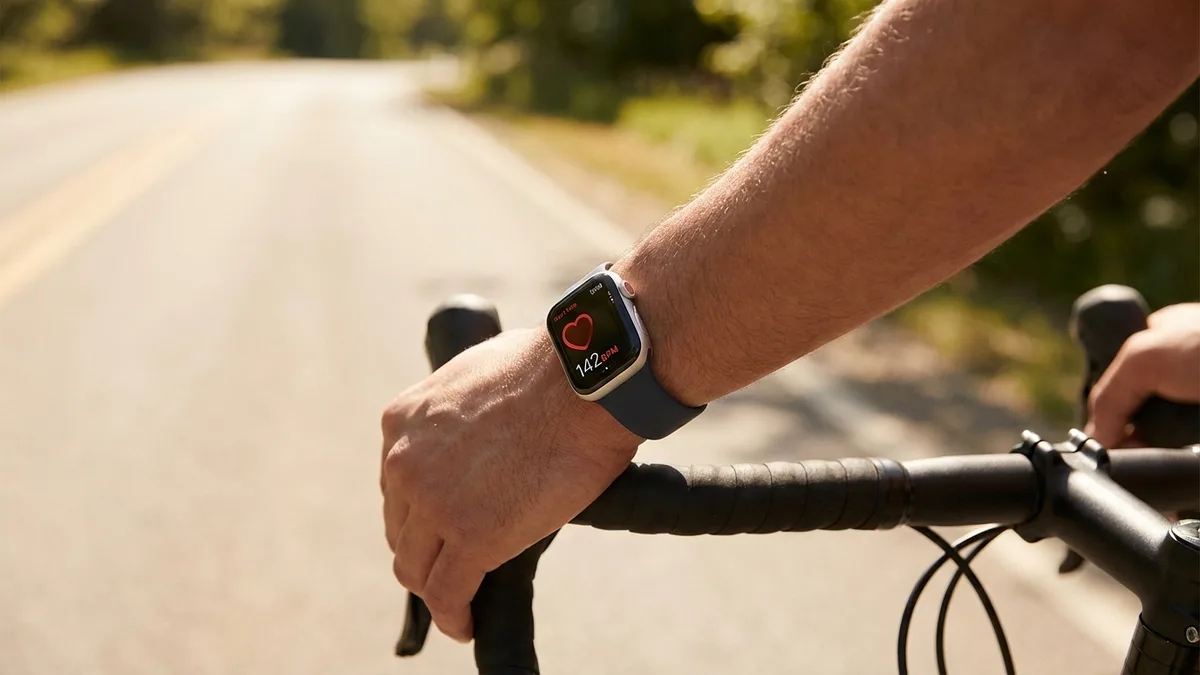
You've seen it on every treadmill: the "fat burning zone" at low intensity. The idea is that exercising at 60–70% of your max heart rate burns the most fat. And technically, it's true — at lower intensities, a higher percentage of calories come from fat.
But here's what the machines don't tell you: percentage isn't the same as total.
As Mass General Brigham's research explains, higher-intensity workouts burn more total calories per minute, which typically leads to greater total fat loss over time — even though a smaller percentage of those calories come from fat. A 30-minute Zone 4 run burns significantly more total energy than a 30-minute Zone 2 walk.
Plus, high-intensity exercise triggers excess post-exercise oxygen consumption (EPOC) — your body continues burning more calories for hours after the workout. Low-intensity exercise doesn't.
The bottom line: the "fat burning zone" isn't wrong — it's just misleading. If your goal is weight loss, total calories burned matters more than what percentage comes from fat. The best approach is a mix: Zone 2 for building your aerobic base and burning fat efficiently during long sessions, and Zone 3–4 intervals for maximizing total caloric burn.
How to Find Your Heart Rate Zones
The simplest method:
- Calculate your max HR: 220 – your age
- Multiply by each zone's percentage
Example for a 35-year-old (max HR = 185 bpm):
| Zone | Calculation | Range |
|---|---|---|
| Zone 1 | 185 × 0.50–0.60 | 93–111 bpm |
| Zone 2 | 185 × 0.60–0.70 | 111–130 bpm |
| Zone 3 | 185 × 0.70–0.80 | 130–148 bpm |
| Zone 4 | 185 × 0.80–0.90 | 148–167 bpm |
| Zone 5 | 185 × 0.90–1.00 | 167–185 bpm |
Apple Watch calculates zones automatically using the heart rate reserve method (which factors in your resting heart rate for more personalized zones) and updates them monthly. Garmin and WHOOP use similar approaches.
The key is watching the trend during your workout, not obsessing over a single reading. If you're doing a Zone 2 run and keep drifting into Zone 3 on every hill, you're going too fast for your current fitness level — and that's useful information.
How to Train with Heart Rate Zones
Here's a practical weekly split that works for most people, whether you're a runner, cyclist, or general fitness enthusiast:
- 3–4 sessions in Zone 2 (30–60 min each) — long walks, easy runs, casual cycling
- 1–2 sessions in Zone 3 (20–45 min) — tempo runs, group fitness, moderate cycling
- 1 session with Zone 4–5 intervals (20–30 min total) — sprints, HIIT, hill repeats
This follows the 80/20 rule used by elite endurance athletes: roughly 80% of training at low intensity (Zones 1–2) and 20% at high intensity (Zones 3–5). Research consistently shows this ratio builds the strongest aerobic base while minimizing injury and burnout.
The most common mistake? Spending too much time in Zone 3 — too hard to build your aerobic base, too easy to trigger real high-intensity adaptations. It's called the "gray zone," and it's where a lot of recreational athletes get stuck, feeling tired without getting faster.
FAQ
What is the best heart rate zone for fat loss?
Despite the "fat burning zone" label, total caloric expenditure matters more than which fuel source dominates. A mix of Zone 2 endurance work and Zone 3–4 intervals creates the most effective fat loss stimulus. Zone 2 burns fat efficiently during the workout; higher zones burn more total calories and trigger EPOC (afterburn effect).
How many hours per week should I do Zone 2 training?
Most longevity and endurance researchers recommend 2–4 hours per week of Zone 2 training for general health benefits. Elite endurance athletes may do 10+ hours. Even 2 hours per week shows measurable improvements in cardiovascular health and metabolic markers.
Is Zone 2 training just slow walking?
Not necessarily. Zone 2 depends on your fitness level. For a very fit runner, Zone 2 might be a 9-minute mile. For someone just starting out, a brisk walk could put them in Zone 2. The heart rate determines the zone, not the activity.
Can I train in Zone 5 every day?
No. Zone 5 creates significant stress on your cardiovascular system and muscles. Most coaches recommend no more than 1–2 Zone 5 sessions per week, with adequate recovery between them. Overtraining in Zone 5 leads to elevated resting heart rate, suppressed HRV, poor sleep, and increased injury risk.
How accurate are Apple Watch heart rate zones?
Apple Watch uses optical heart rate sensors that are generally reliable for Zone 1–4 activities. Accuracy can drop during high-intensity intervals (Zone 5) or activities with a lot of wrist movement. For maximum accuracy, ensure a snug fit and consider a chest strap for structured interval training.
Start Training Smarter with Heart Rate Zones
Now that you know what each zone does, the next step is actually tracking which zones you spend time in during your workouts — and over the course of your week. Most people are surprised to learn they spend almost all their time in Zone 3, missing out on the benefits of both low-intensity endurance and true high-intensity work.
Livity tracks your heart rate zones automatically from your Apple Watch — showing you exactly how much time you spend in each zone, plus recovery, stress, body battery, and training load. No extra hardware, no subscription to WHOOP or Oura. Your data stays on your device. Free to try on the App Store.

iOS developer with 7+ years of experience and an active volleyball player. Built Livity after spending months looking for advanced recovery and sleep tracking that worked natively with Apple Watch — and finding nothing. Uses his own HRV, sleep, and training-load data every day to shape what Livity measures.
More from this authorStart Your Wellness Journey Today
Live Your Best Life
Join thousands of users who are already tracking their health with Livity.