
Best Oura Ring Alternatives in 2026 (No Extra Hardware Needed)

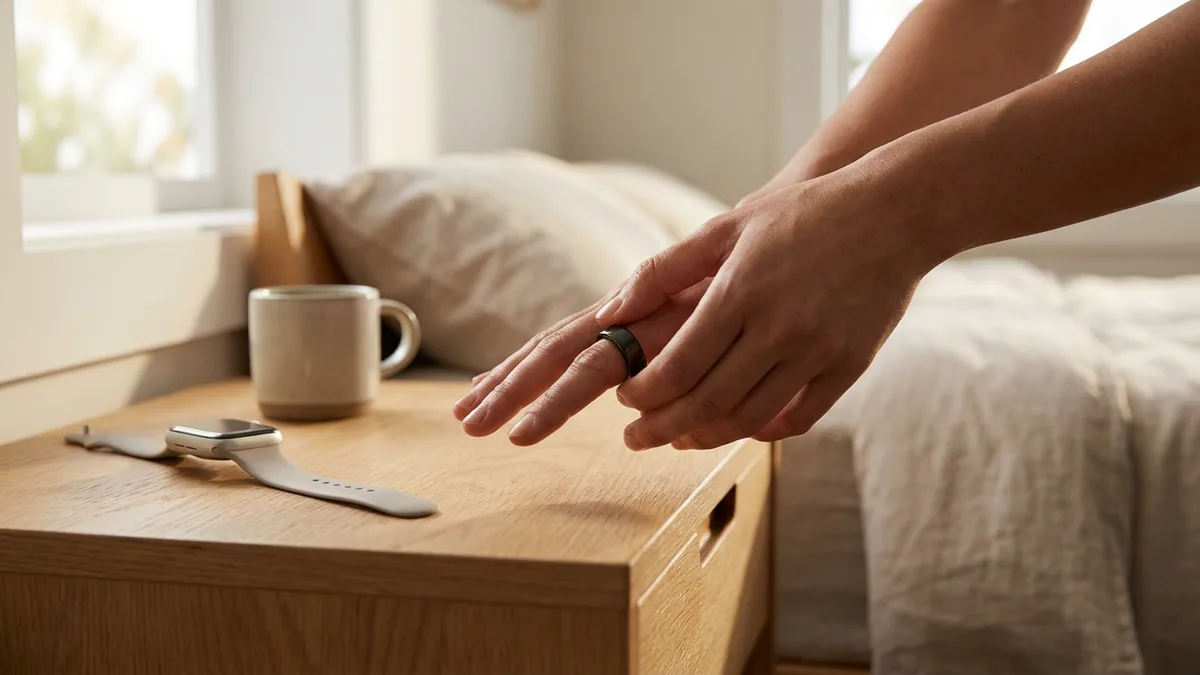
The Oura Ring is one of the most popular health wearables on the market — and for good reason. It tracks sleep stages, HRV, skin temperature, and recovery in a tiny titanium ring you barely notice on your finger.
But there's a problem most people don't realize until after they buy one: the Oura Ring locks most of its features behind a $6/month subscription. Cancel that subscription, and the $349+ ring you just bought shows you almost nothing.
If you own an Apple Watch, you already have every sensor you need to track what Oura tracks — without spending another dollar on hardware or subscriptions.
What the Oura Ring Actually Costs
The Oura Ring 4 starts at $349 for the basic silver finish and goes up to $499 for premium materials. On top of that, Oura charges $5.99/month (or $69.99/year) for its membership.
Here's the part that frustrates people: without the subscription, your Oura Ring is nearly useless. You lose access to:
- Sleep stages (REM, deep, light sleep breakdowns)
- HRV trends and analysis
- Readiness score
- Temperature trends (used for cycle tracking and illness detection)
- Blood oxygen (SpO2) data
- Stress tracking
- Personalized recovery insights
What's left without paying? Three basic scores with no context. As one reviewer put it: "The scores you get without a subscription are pretty useless — just numbers without insight."
Over three years, an Oura Ring 4 costs you $559 or more when you add hardware plus the subscription. And if you stop paying, you lose access to most of your own health data.
Your Apple Watch Already Has These Sensors
Every Apple Watch from Series 6 onward includes:
- Optical heart rate sensor — continuous heart rate and resting heart rate, same as Oura
- Heart rate variability (HRV) — measured nightly during sleep, same as Oura
- Accelerometer and gyroscope — for sleep stage detection and movement tracking
- Skin temperature sensor — available on Series 8 and newer, same as Oura Ring 4
- Blood oxygen (SpO2) — available on Series 6 and newer
With watchOS 26, Apple added a Sleep Score (rated 0–100), sleep stage tracking (REM, deep, core), and Training Load analysis. These are built in — no subscription required.
The difference? Apple scatters these metrics across multiple apps with no unified dashboard. You get pieces of the puzzle, but no single screen that tells you: "Here's how recovered you are. Here's whether you should train hard today."
That's the gap an app can fill.
📱 Livity turns your Apple Watch into a full recovery and sleep tracker — with daily readiness scores, body battery, HRV trends, and more. No extra hardware, no subscription. Try it free →
How to Replace Every Oura Feature With Your Apple Watch
Here's a side-by-side comparison of what Oura Ring tracks versus what your Apple Watch can deliver:
| Feature | Oura Ring 4 | Apple Watch + Livity |
|---|---|---|
| Sleep stages (REM, deep, light) | ✅ Requires subscription | ✅ Free (watchOS 26) |
| Sleep score | ✅ Requires subscription | ✅ Free (watchOS 26 + Livity) |
| HRV tracking | ✅ Requires subscription | ✅ Free |
| Resting heart rate | ✅ Requires subscription | ✅ Free |
| Recovery / readiness score | ✅ Requires subscription | ✅ Free (Livity) |
| Body battery / energy level | ❌ Not available | ✅ Free (Livity) |
| Skin temperature | ✅ Requires subscription | ✅ Free (Series 8+) |
| Blood oxygen (SpO2) | ✅ Requires subscription | ✅ Free (Series 6+) |
| Training load | ❌ Not available | ✅ Free (watchOS 26) |
| Stress monitoring | ✅ Requires subscription | ✅ Free (Livity) |
| Fitness age | ❌ Not available | ✅ Free (Livity) |
| Workout tracking | ⚠️ Basic (no screen) | ✅ Full (real-time on wrist) |
| Subscription required | Yes ($6/month) | No |
| Extra hardware needed | Yes ($349+) | No |
The Apple Watch doesn't just match the Oura Ring — it goes beyond it in several areas. Training load, body battery, real-time workout tracking, and fitness age are features the Oura Ring simply doesn't offer, even with the subscription.
What You Actually Get Without Paying Extra
If you already own an Apple Watch, here's what Livity unlocks — all for free:
Recovery score — Every morning, you get a readiness number based on your overnight HRV, resting heart rate, and sleep quality. It tells you whether to push hard, go moderate, or take a rest day. This is exactly what Oura's Readiness Score does — minus the subscription.
Body battery — A real-time energy tracker that drains during activity and stress, and recharges during rest and sleep. Oura doesn't offer this at all. It's one of the most practical metrics for knowing when to stop pushing and start recovering.
Sleep analysis — Sleep stages, sleep score, and multi-day trends. See how your REM and deep sleep fluctuate and what's affecting them.
HRV tracking — Nightly HRV with trend lines and context. A dropping HRV trend over several days can signal overtraining, illness, or accumulated stress — before you feel it.
Training load — See whether you're overtraining, undertraining, or in the sweet spot. Oura tracks activity minutes but doesn't analyze training load.
Stress monitoring — Real-time stress levels throughout the day, based on HRV and heart rate patterns.
Fitness age — How your cardiovascular fitness compares to population averages for your age. Oura offers "Cardiovascular Age" but only with the subscription.
Privacy-first — Your health data never leaves your device. No account required. No cloud sync. No one sees your data but you.
The Real Cost Comparison
| Year 1 | Year 2 | Year 3 | 3-Year Total | |
|---|---|---|---|---|
| Oura Ring 4 | $419 | $70 | $70 | $559 |
| Oura Ring 4 (no sub) | $349 | $0 | $0 | $349 (limited features) |
| Apple Watch + Livity | $0* | $0 | $0 | $0* |
*Assumes you already own an Apple Watch. If not, the Apple Watch SE starts at $249 — still cheaper than an Oura Ring with one year of subscription.
And here's the part that matters most: if you stop paying for Oura, your ring becomes nearly useless. If you stop using Livity, your Apple Watch still works perfectly. Your data is yours, in Apple Health, forever.
When the Oura Ring Still Makes Sense
To be fair, the Oura Ring has real advantages in specific situations:
- You don't want to wear a watch to bed. The ring is far more comfortable for sleep than any watch. If wearing something on your wrist overnight bothers you, Oura is genuinely better.
- You want the most discreet form factor. It looks like jewelry. Nobody knows you're wearing a health tracker.
- You want menstrual cycle tracking from skin temperature. Oura's cycle prediction is one of its standout features, though Apple Watch Series 8+ offers similar temperature-based tracking.
But if you're already wearing an Apple Watch — especially to bed — buying an Oura Ring on top of it means paying for redundant sensors.
Frequently Asked Questions
Is there a free alternative to the Oura Ring? Yes. If you own an Apple Watch, you can get sleep stages, HRV tracking, recovery scores, body battery, stress monitoring, and more through free apps. Your Apple Watch has the same core sensors as the Oura Ring — optical heart rate, accelerometer, and temperature.
Can Apple Watch replace an Oura Ring for sleep tracking? Apple Watch tracks sleep stages (REM, deep, core), sleep duration, and sleep score with watchOS 26. Combined with a companion app, it delivers the same sleep insights as Oura — including trends, HRV analysis, and readiness scores.
Is the Oura Ring worth it without the subscription? Without the $6/month Oura membership, you only see three basic daily scores with no context. You lose sleep stages, HRV trends, temperature data, readiness scores, and all personalized insights. Most reviewers agree the ring is not worth the hardware cost without the subscription.
What does the Oura Ring do that Apple Watch can't? The main advantage is form factor — it's a ring, not a watch, which is more comfortable for sleep and more discreet. Oura also tends to be slightly more accurate for sleep onset detection. But in terms of features and metrics, Apple Watch with the right app matches or exceeds what Oura offers.
How accurate is Apple Watch HRV compared to Oura? Both devices use optical heart rate sensors to measure HRV and produce comparable results for tracking trends over time. A 2026 validation study found that consumer wearables, including Apple Watch, are within 10 milliseconds of clinical ECG measurements for HRV — accurate enough to guide training and recovery decisions.
Start Tracking Your Health Without Extra Hardware
You don't need a $349 ring and a $6/month subscription to understand your sleep, recovery, and stress. Your Apple Watch is already collecting the data — you just need an app that makes sense of it.
Livity turns your Apple Watch into a full health tracker — with recovery scores, body battery, HRV trends, sleep analysis, stress monitoring, and fitness age. No Oura Ring, no subscription, no data leaving your device. Free to try on the App Store.

iOS developer with 7+ years of experience and an active volleyball player. Built Livity after spending months looking for advanced recovery and sleep tracking that worked natively with Apple Watch — and finding nothing. Uses his own HRV, sleep, and training-load data every day to shape what Livity measures.
More from this authorStart Your Wellness Journey Today
Live Your Best Life
Join thousands of users who are already tracking their health with Livity.