
Apple Shelved Its AI Health Coach — Here's What That Means for You

Apple Shelved Its AI Health Coach — Here's What That Means for You
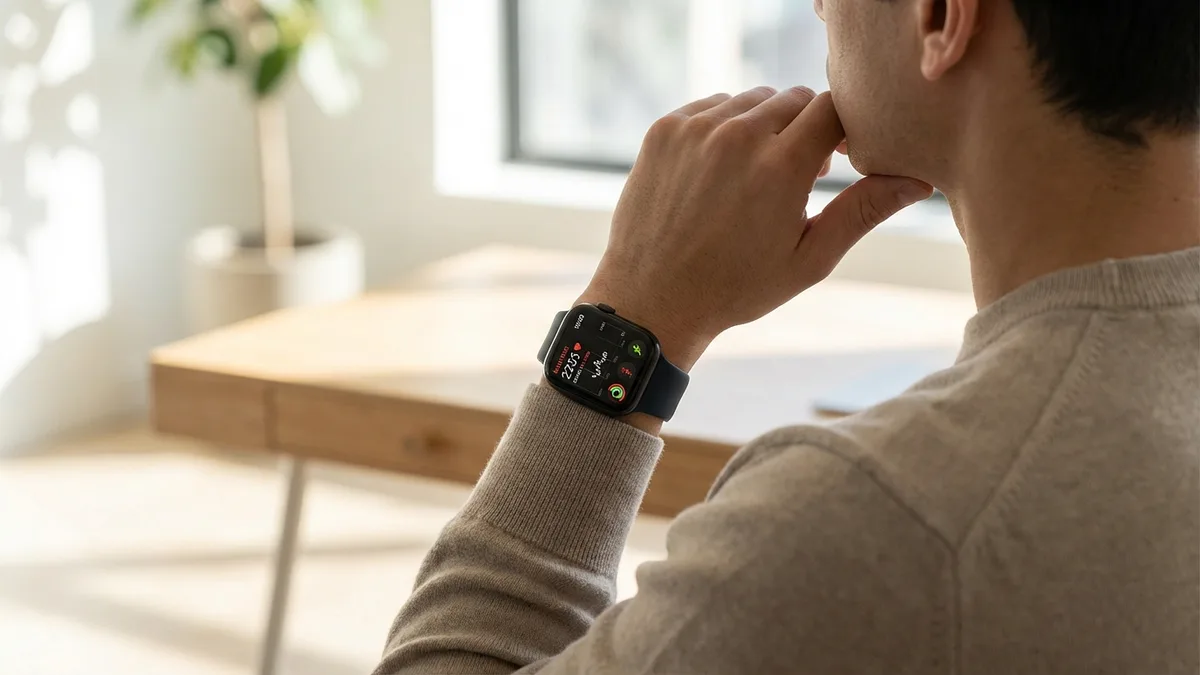
Apple had big plans for an AI health coach built right into your iPhone. Then, in February 2026, those plans quietly fell apart.
If you've been waiting for Apple to turn your Health app into a personal wellness advisor, here's what actually happened — and what you can do about it right now.
What Was Apple Building?
For the past several years, Apple had been developing an ambitious project internally codenamed "Mulberry" — an AI-powered health coaching service that would have launched as Health+.
The scope was massive. According to Bloomberg's original report, Apple assembled a team of sleep experts, nutritionists, physical therapists, cardiologists, and mental health professionals to train the AI and create educational content.
Here's what the Apple Health AI coach was supposed to include:
- Personalized health coaching — an AI agent that analyzed your Apple Watch data, survey responses, and even external lab reports to give tailored recommendations
- Nutrition tracking and meal logging — a built-in food tracker with feedback connecting your diet to energy, sleep, and performance
- Exercise form analysis — using your iPhone camera to evaluate workout technique in real time
- Chronic disease management — personalized guidance for users managing ongoing health conditions
- Expert video content — a library of videos hosted by a "major doctor personality," produced in a dedicated studio Apple built in Oakland, California
It was the most ambitious health software project Apple had ever attempted. And it was supposed to launch with iOS 26.
Why Apple Pulled the Plug
The story behind the cancellation involves a leadership shakeup, competitive pressure, and the hard realities of health AI.
Eddy Cue took over Apple's health division after longtime COO Jeff Williams retired at the end of 2025. Cue — Apple's Services chief — looked at the Mulberry project and decided it wasn't good enough. He told colleagues that competitors like Oura and Whoop already offered "more compelling and useful features," particularly through their iPhone apps.
That's a striking admission from an Apple executive. The company that makes the most popular smartwatch in the world felt it was falling behind dedicated health startups.
But competitive pressure wasn't the only factor. Reports from Winbuzzer indicated that FDA regulatory concerns and AI reliability issues also played a role. An AI health coach needs to be consistently accurate — errors in health guidance carry real consequences. Apple apparently decided the technology wasn't ready for the level of trust required.
The AI leadership restructuring at Apple — with John Giannandrea preparing to step down — added further organizational disruption that stalled the project's momentum.
📱 Livity already delivers recovery scores, body battery, and sleep insights from your Apple Watch — no AI subscription needed. Try it free →
What's Still Coming to the Health App
The good news: Apple didn't trash everything. Instead of launching a full Health+ service, the company plans to roll out individual features piecemeal over the coming months.
Here's what's reportedly still on the roadmap:
iOS 26.4 (Spring 2026):
- Native nutrition tracking — built-in calorie counting and macronutrient logging, removing the need for third-party apps like MyFitnessPal
- AI-powered Health Agent — a scaled-down version of the original coach that analyzes biometric data for personalized lifestyle recommendations
iOS 27 and beyond:
- AI health chatbot — the ability to ask wellness questions using Apple's "World Knowledge Answers" technology
- Gait analysis — using the iPhone camera to assess walking patterns
- Enhanced Siri health queries — more natural health-related questions across the operating system
Health+ premium tier (later 2026):
- A subscription service, internally codenamed "Quartz", offering educational video content from medical professionals on topics like sleep hygiene and physical therapy
The approach makes sense. Ship what works, test it with real users, and expand gradually. But it also means the "all-in-one AI health coach" vision is off the table for now.
What This Means for Apple Watch Users
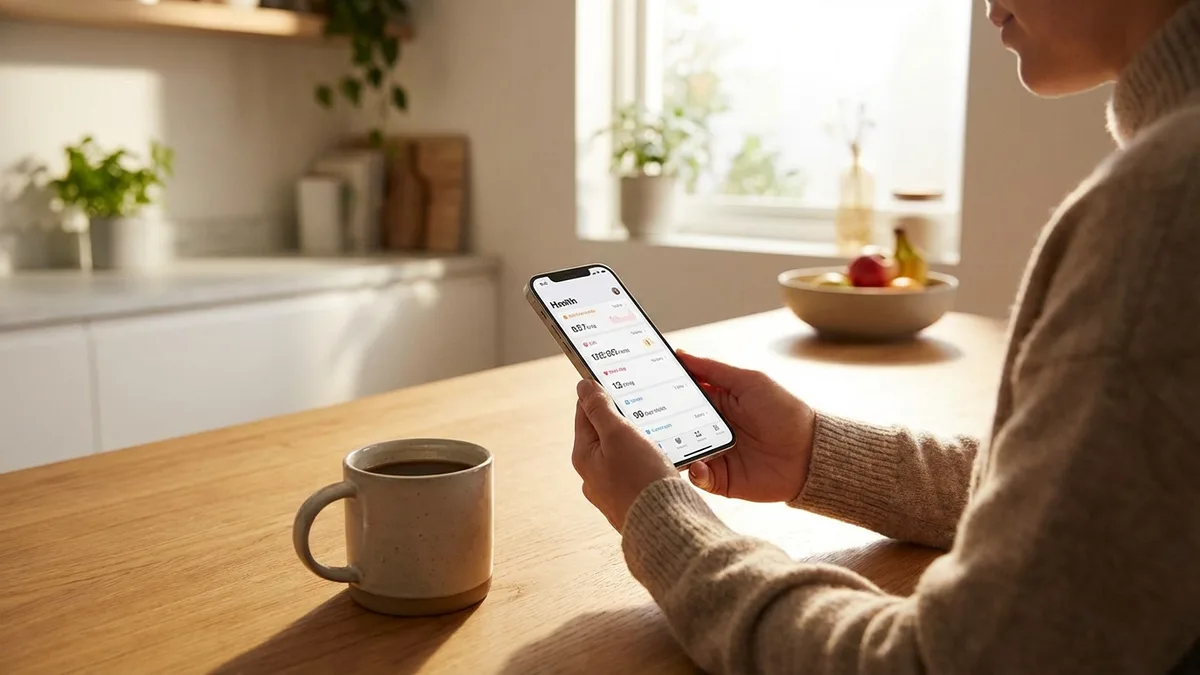
Let's be honest about where this leaves you today.
Your Apple Watch is one of the most capable health sensors you can wear. It tracks HRV, resting heart rate, blood oxygen, sleep stages, respiratory rate, and wrist temperature. The hardware has been ready for years.
The software hasn't caught up. Apple Health remains mostly a data repository — it collects everything but tells you very little about what it means. You can see your HRV number, but what should you do with it? The Health app doesn't say.
That's the gap the AI health coach was supposed to fill. And now it's delayed indefinitely.
This is exactly why third-party apps have thrived. Apps like Livity already take the raw data from your Apple Watch and turn it into actionable daily insights — recovery scores, body battery, sleep analysis, and stress tracking — without waiting for Apple to ship something.
The difference is meaningful. Instead of staring at a chart of HRV numbers wondering if 42ms is good or bad, you get a clear recovery score that tells you whether to push hard today or take it easy.
What You Can Do Right Now
You don't need to wait for Apple's AI coach. Here's what's available today:
1. Use your Apple Watch sleep tracking Make sure you're wearing your Apple Watch to bed. Sleep stages (Deep, REM, Core) are tracked automatically on Series 8 and newer. This is the foundation of any recovery metric.
2. Check your HRV trends Heart rate variability is the single best indicator of recovery and readiness. Your Apple Watch measures it nightly. Look for your personal baseline and watch for dips — they often signal that your body needs rest.
3. Get a recovery score Raw data is useful, but a daily recovery score saves you the interpretation work. Livity combines your HRV, resting heart rate, sleep quality, and other Apple Watch metrics into a single recovery score and body battery — updated every morning, processed entirely on your device for privacy.
4. Track trends, not single days One bad night doesn't mean much. Three in a row is a pattern. Whatever tools you use, focus on weekly trends rather than daily fluctuations.
5. Act on the data The best tracking in the world is useless if you ignore it. Low recovery? Take a rest day or do light activity. High recovery? That's your green light to train hard. The whole point is making better daily decisions.
FAQ
Is Apple's Health+ AI coach completely cancelled?
Not exactly. Apple shelved the full Health+ launch as a standalone service but plans to roll out individual features over time within the existing Health app. Some features — like nutrition tracking and a scaled-down AI Health Agent — may arrive as soon as spring 2026 with iOS 26.4.
What was Project Mulberry?
Project Mulberry was Apple's internal codename for its AI-powered health coaching initiative. It included personalized health recommendations, expert video content, nutrition guidance, and exercise coaching — all powered by AI trained with input from medical professionals. The project was wound down in early February 2026 after a leadership change in Apple's health division.
Will Apple still launch a Health+ subscription?
Reports suggest Apple is still planning a premium health tier codenamed "Quartz" for later in 2026. However, its scope will be significantly reduced compared to original plans — likely focused on educational video content from health professionals rather than a full AI coaching experience.
Can I get health coaching from my Apple Watch right now?
Yes — through third-party apps. While Apple's built-in Health app doesn't offer coaching features yet, apps like Livity use your Apple Watch data to generate daily recovery scores, body battery, and sleep insights. No additional hardware or subscription is required.
Why did Apple shelve the AI health coach?
Multiple factors contributed: a leadership change (Eddy Cue taking over from Jeff Williams), competitive pressure from Oura and Whoop, FDA regulatory concerns around AI-generated health advice, and AI reliability issues. Cue reportedly felt the project didn't meet Apple's competitive bar.
Get Health Insights From Your Apple Watch Today
You don't need to wait for Apple's AI coach. Livity already turns your Apple Watch data into actionable recovery scores, body battery, and sleep insights — all processed on your device.
Livity tracks your sleep, recovery, HRV, and stress automatically from your Apple Watch — no extra hardware, no subscription wall. Free to try on the App Store.

iOS developer with 7+ years of experience and an active volleyball player. Built Livity after spending months looking for advanced recovery and sleep tracking that worked natively with Apple Watch — and finding nothing. Uses his own HRV, sleep, and training-load data every day to shape what Livity measures.
More from this authorStart Your Wellness Journey Today
Live Your Best Life
Join thousands of users who are already tracking their health with Livity.