
Nervous System Regulation: What Your HRV Data Is Actually Telling You

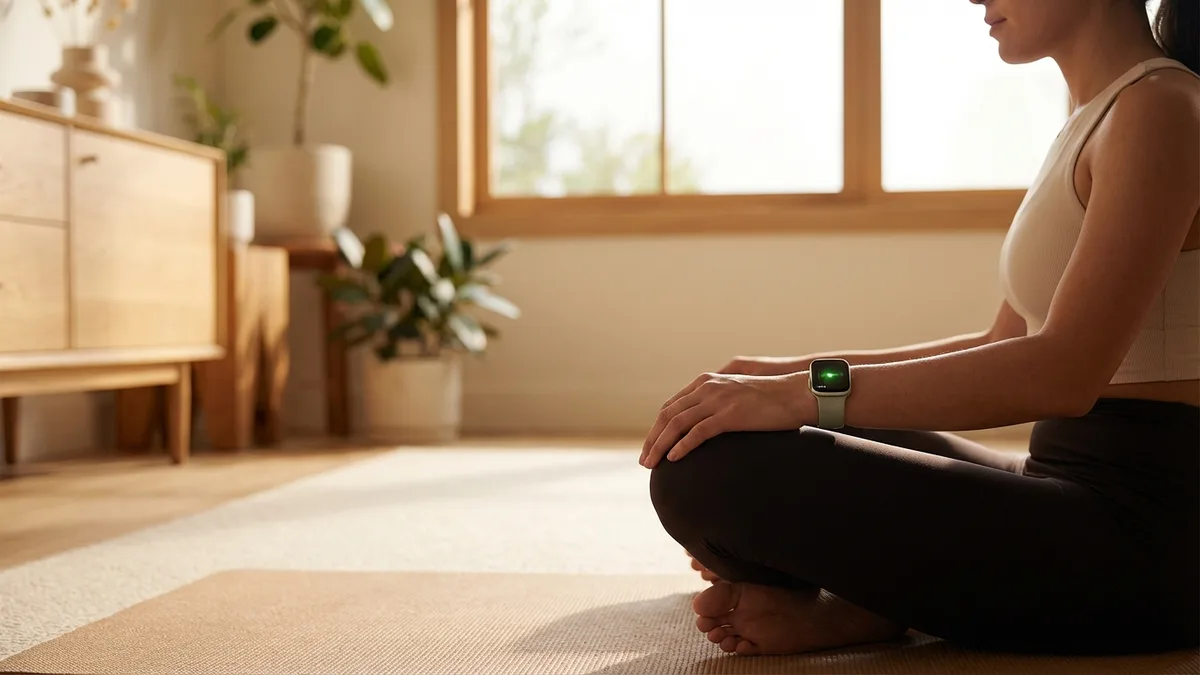
Nervous system regulation is everywhere right now. Social media is full of breathwork routines, cold plunges, and vagus nerve "hacks" promising to reset your stress response. It's the wellness trend of 2026 — and unlike most trends, this one is backed by real science.
But here's the problem: most people have no idea whether any of it is actually working.
They do a 5-minute breathing exercise, feel slightly calmer, and call it a win. Maybe it helped. Maybe it was placebo. There's no way to tell — unless you look at the data your Apple Watch is already collecting.
Your Apple Watch Is Already a Nervous System Monitor
Your autonomic nervous system (ANS) has two main branches. The sympathetic branch handles fight-or-flight — it speeds up your heart, sharpens your focus, and dumps cortisol when you're stressed. The parasympathetic branch handles rest-and-digest — it slows your heart, promotes recovery, and helps you sleep.
Good health depends on your body smoothly shifting between these two states. That's what "nervous system regulation" actually means: the ability to activate and deactivate your stress response appropriately.
Your Apple Watch measures this balance through a metric called heart rate variability (HRV). HRV is the variation in time between each heartbeat, measured in milliseconds. It sounds counterintuitive, but a healthy heart doesn't beat like a metronome — it speeds up slightly when you inhale and slows down when you exhale.
- Higher HRV = strong parasympathetic tone, good stress resilience, well-regulated nervous system
- Lower HRV = sympathetic dominance, chronic stress load, nervous system stuck in "on" mode
A comprehensive review in Frontiers in Public Health (Shaffer & Ginsberg, 2017) established HRV as the gold-standard non-invasive marker for autonomic nervous system balance. Your Apple Watch tracks it every day — most people just never look at it.
What Nervous System Dysregulation Actually Looks Like in Your Data
You know the feeling: you're exhausted but can't sleep. You're resting but your heart rate stays elevated. You took a rest day but still feel wrecked the next morning.
That's nervous system dysregulation — your body stuck in sympathetic mode even when there's no real threat. And it shows up clearly in your wearable data if you know what to look for:
The signs:
- HRV trending downward over 5+ days (not a single bad reading — the trend matters)
- Resting heart rate creeping up by 3-5 BPM above your baseline
- Sleep quality declining — less deep sleep, more awakenings, even with enough total hours
- Body battery or recovery scores not returning to full even after rest days
- Elevated stress readings during times you should be relaxed (evening, weekends)
A meta-analysis of 21 studies published in Psychosomatic Medicine (Jarczok et al., 2019) found that chronically low HRV is associated with a 32-45% increased risk of cardiovascular events. This isn't just a wellness buzzword — it's a measurable health signal your watch is already picking up.
The key insight most articles miss: a single HRV reading is nearly useless. What matters is your personal baseline trend over weeks and months. A "good" HRV for one person might be 45ms; for another it's 85ms. The question isn't "what's my number" — it's "is my number trending up or down?"
Livity tracks your HRV, stress, and recovery trends automatically from your Apple Watch — so you can actually see whether your nervous system is regulated or stuck. Try it free →
5 Science-Backed Ways to Regulate Your Nervous System (That You Can Measure)
The difference between a wellness fad and a real practice is whether you can verify it's working. Here are five techniques with strong research support — and how to track their impact with your wearable data.
1. Slow Breathing (Most Evidence-Backed)
This is the single most effective acute intervention for shifting your nervous system from sympathetic to parasympathetic mode.
The protocol: Breathe at roughly 5.5 breaths per minute — inhale for 5 seconds, exhale for 6 seconds. This matches your body's "resonance frequency," where HRV amplitude is maximized.
A Stanford study (Balban et al., 2023) published in Cell Reports Medicine found that just 5 minutes of "cyclic sighing" (an extended-exhale breathing pattern) per day was more effective at reducing physiological stress markers than mindfulness meditation.
Research on HRV biofeedback (Lehrer & Gevirtz, 2014, Frontiers in Psychology) shows that regular practice at this breathing rate can increase resting HRV by 10-15% over 8-10 weeks.
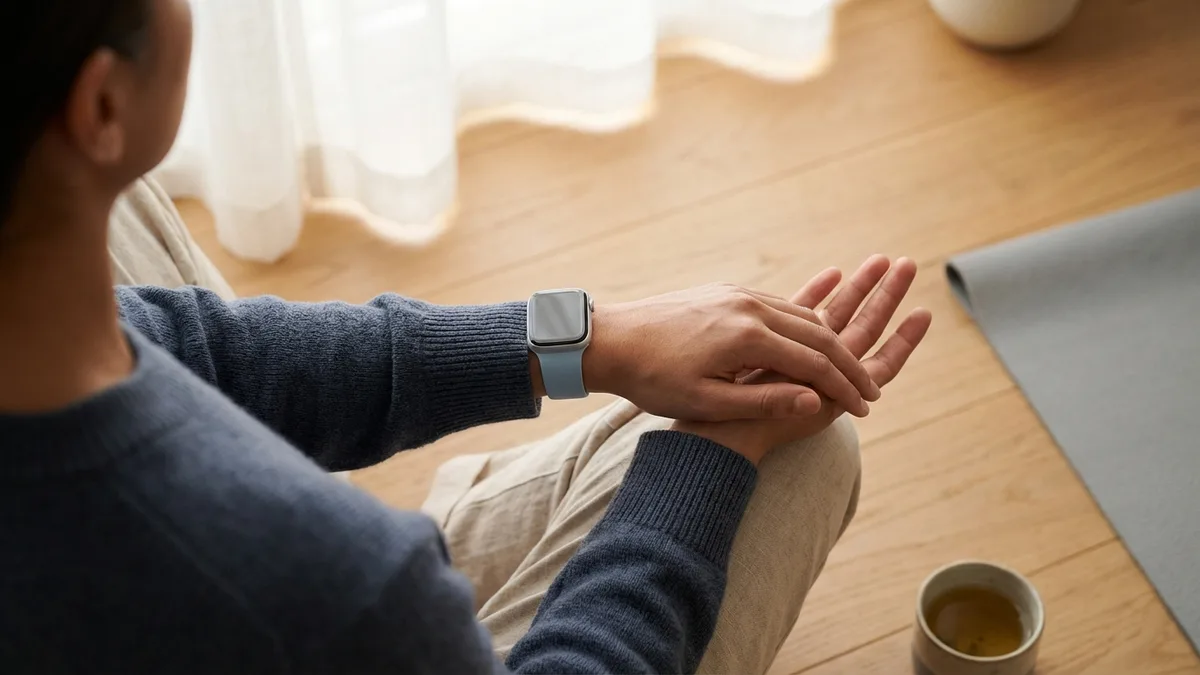
How to track it: Do your breathing exercise, then check your HRV and stress data afterward. Over weeks, watch whether your resting HRV baseline starts trending upward. That's your nervous system adapting.
2. Cold Exposure (The Diving Reflex)
Cold water on your face triggers something called the diving reflex — an involuntary response that immediately shifts your nervous system toward parasympathetic dominance.
The protocol: Splash cold water on your face for 15-30 seconds, or finish your shower with 30-60 seconds of cold water (around 15°C / 59°F). You don't need an ice bath — the face and neck are the trigger zones.

How to track it: You'll typically see your heart rate drop and HRV spike within minutes after cold exposure. Track whether regular morning cold exposure correlates with better stress scores throughout the day.
3. Consistent Aerobic Exercise
Regular moderate exercise is the single strongest long-term HRV improver according to research. A study in the European Heart Journal (Rennie et al., 2003) found that physically active individuals had significantly higher HRV than sedentary controls.
The protocol: 150+ minutes per week of moderate aerobic activity — walking, jogging, cycling, swimming. The key word is "consistent." A single intense session actually temporarily lowers HRV (your sympathetic system fires up during exercise), but the recovery rebound pushes your baseline higher over time.
How to track it: Watch your resting HRV trend over 4-8 weeks of consistent training. You should see a gradual upward trend, especially in your overnight HRV readings.
4. Sleep Optimization
Your parasympathetic nervous system does most of its restoration work during deep sleep (N3 stage). Even one night of poor sleep can reduce HRV by 20-30%, according to sleep deprivation studies.
The protocol: The basics matter more than any hack — consistent bedtime (within 30 min), cool room (18-19°C / 65°F), no alcohol within 3 hours of bed, no caffeine after 2pm. These aren't exciting, but they show up dramatically in data.
How to track it: Compare your deep sleep percentage and overnight HRV on nights you follow your protocol vs. nights you don't. The correlation is usually striking.
5. Social Connection and Downtime
This one doesn't get enough attention in the biohacking world. Your nervous system evolved to regulate through social engagement — safe conversation, laughter, physical proximity to people you trust. This is backed by research on the social baseline theory of neural threat processing.
The protocol: Deliberately schedule unstructured time with friends or family — no screens, no agenda. Even 30 minutes of genuine social connection can shift your autonomic state.
How to track it: Check your evening HRV and stress scores on days with meaningful social connection vs. days spent isolated or doom-scrolling. Most people are surprised by the difference.
The Feedback Loop: Detect, Act, Verify
Here's what makes wearable data genuinely useful for nervous system regulation — and what most wellness content completely misses:
You can close the feedback loop.
- Detect: Your daily data shows your nervous system state — HRV trending down, stress scores elevated, recovery not bouncing back
- Act: You apply a technique — breathwork before bed, morning cold exposure, an evening walk instead of Netflix
- Verify: Your data shows whether it actually moved the needle — did your overnight HRV improve? Did your morning recovery score come back?
Without step 3, you're just guessing. Most nervous system regulation advice stops at step 2: "Do this breathing exercise, trust us, it works." But bodies are different. What works for one person doesn't always work for another. The data tells you what YOUR nervous system responds to.
Is This Just a Trend, or Does It Actually Matter?
Nervous system regulation has become a social media buzzword — which naturally makes people skeptical. But the underlying science is decades old. HRV has been used in clinical settings since the 1960s. The vagus nerve's role in stress regulation has been studied extensively since the 1990s.
What's new in 2026 isn't the science — it's the accessibility. Five years ago, tracking your autonomic nervous system required a clinical-grade ECG or a $300+ wearable. Now, 50% of US adults own a smartwatch that measures HRV passively, every day, without them thinking about it.
The trend is real. The science is real. The only thing that's been missing is a way to turn the data into action — which is exactly what a good health tracking app does.
Frequently Asked Questions
Can Apple Watch really measure nervous system health? Yes. Apple Watch tracks HRV using its optical heart rate sensor, and studies show its measurements correlate strongly (r > 0.9) with clinical ECG readings. HRV is the gold-standard non-invasive marker for autonomic nervous system balance.
What's a "good" HRV number? It varies wildly by age and individual. Generally, RMSSD values for healthy adults range from 20-100+ ms, declining with age. But your personal trend matters far more than any single number. Focus on whether your HRV is trending up or down over weeks.
How long does it take to regulate a dysregulated nervous system? Acute techniques like slow breathing can shift your state within minutes. But building lasting resilience — a higher baseline HRV and better stress recovery — typically takes 4-10 weeks of consistent practice.
Does breathwork actually work, or is it placebo? It works. A 2023 Stanford study published in Cell Reports Medicine found that 5 minutes of cyclic sighing per day reduced physiological stress markers more effectively than mindfulness meditation. The mechanism is well-understood: slow breathing with extended exhales directly stimulates the vagus nerve.
What's the difference between calming down and regulating your nervous system? Calming down is a temporary state. Regulation is the ability to shift between states appropriately — activating when you need energy and deactivating when you need rest. A well-regulated nervous system isn't always calm; it's responsive and flexible.
Start Tracking Your Nervous System Today
Your Apple Watch is already collecting the data — HRV, heart rate, sleep stages, stress signals. The question is whether you're actually looking at it, understanding what it means, and using it to guide your choices.
Livity turns that raw data into a clear picture of your nervous system health — tracking your HRV trends, recovery, stress, and sleep quality automatically from your Apple Watch. No Oura Ring, no Whoop strap, no extra hardware. Free to try on the App Store.

iOS developer with 7+ years of experience and an active volleyball player. Built Livity after spending months looking for advanced recovery and sleep tracking that worked natively with Apple Watch — and finding nothing. Uses his own HRV, sleep, and training-load data every day to shape what Livity measures.
More from this authorStart Your Wellness Journey Today
Live Your Best Life
Join thousands of users who are already tracking their health with Livity.